

Perennial Plant of the Year 2026
Andropogon gerardii 'Blackhawks'
‘Blackhawks’ Big Bluestem
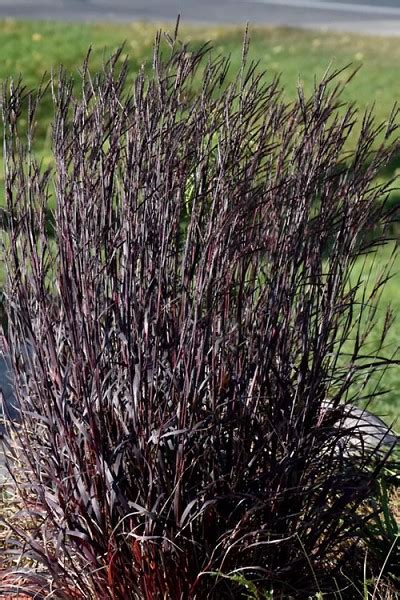 Every year the Perennial Plant Association sends each member a ballot to select a Perennial Plant of The Year.These plants tend not to be new introductions to the garden world, but plants that have been tested and thus proven worthy for nomination.They need to be suitable for a wide range of climatic zones. The plant chosen must be low maintenance, relatively pest free, and disease resistant. It must have multiple seasons of ornamental interest and be readily available for the year of promotion. After the selection the plant is promoted across Canada and continental U.S.A.
“And who is the Perennial Plant Association, you might ask?Mostly, it is a large group of greenhouse growers, retailers, landscapers, horticultural teachers, and “plant geeks” that work in our huge industry. The membership is large, and people join from all around the world and meet once a year at an annual convention. Here, we listen to speakers, tour greenhouses and nurseries, have a trade show, and in general, find out what the others in the industry are up to.
It began in 1990, when the first Plant of the Year was Phlox stolonifera. Next was Heuchera micrantha “Palace Purple” and from that time on each year another perennial was picked and promoted. Most of the time the plants selected by the Perennial Plant Association are very hardy. Except for a very few plants that are not hardy at all, Vale's Greenhouse has always been very pleased with the choices. The Perennial Plant of the Year, for the 2026 gardening season Andropogon gerardii 'Blackhawks' has been chosen.
This species of very hardy ornamental grass Andropogon gerardii is native across the eastern two-thirds of North America. It grows in meadows, prairies and grasslands. The cultivar 'Blackhawks' was selected by plant breeder Brent Horvath, and it loves to grow in the perennial border in a hot sunny location..
Spring growth begins with dark green leaves appearing in early May. In mid summer, the grassy leaves turn deep purple, with the colour shifting first at their tips and then spreading downward. By August, the characteristic three-parted “turkeyfoot” inflorescences (seedhead) appears, and by September, the entire plant takes on a deep purple hue, turning from dark purple to nearly black.
This grass is low maintenance with no major pest or disease concerns. The only required care is cutting it back to the ground in the fall like other ornamental grasses. Once established, a process that may take a few years, Blackhawks becomes very drought tolerant.It will quickly become a standout in the garden. Reaching a height of about 5 feet, (152 cm) with a spread of about 24inches round (60cm)